PARP (Poly(ADP-ribose) polymerase)
PARP (Poly(ADP-ribose) polymerase)
 Download Product PDF
MSDS Download Product PDF
Download Product PDF
MSDS Download Product PDF
Antigen Preparation
A recombinant protein of human PARP
Background
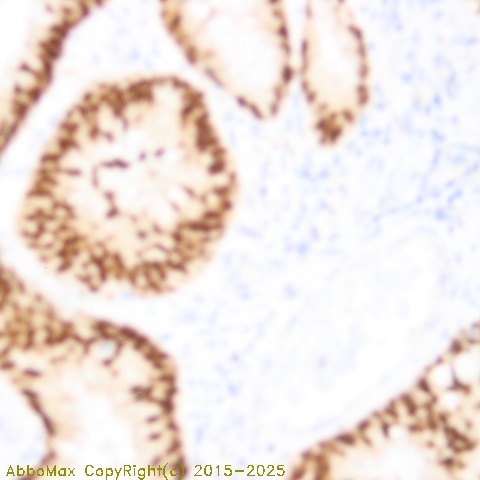
"PARP (Poly (ADP-ribose) polymerase) is a 113 kD nuclear protein that can exist as a homo- or hetero-dimer. This protein acts as a molecular ""nick sensor"" and functions in base excision repair, poly(ADP-ribosyl)ation of acceptor proteins involved in chromatin architecture and DNA metabolism and participates in protein modification to enhance or repress transcription. PARP is ribosylated by PARP2 and is a target for caspase cleavage during apoptosis. PARP interacts with proteins in the base excision repair complex containing at least XRCC1, PARP2, POLB and LIG3. In addition PARP forms heterodimers with PARP2, and interacts with PARP3. The 5A5 monoclonal antibody recognizes the N-terminal region of human and mouse PARP and has been shown to be useful for Western blotting and immunofluorescence staining."
PURIFICATION
The mouse IgG is purified by Protein A-Affinity Chromatography according to Isotyping
|
SPECIFICITY
This antibody recognizes human PARP (Poly(ADP-ribose) polymerase) protein. The other species are not tested.
|
FORMULATION
This affinity purified antibody is supplied in sterile Phosphatebuffered saline (pH7.2) containing antibody stabilizer
|
STORAGE
The antibodies are stable for 24 months from date of receipt when stored at –20oC to –70oC. The antibodies can be stored at 2oC-8oC for three month without detectable loss of activity. Avoid repeated freezing-thawing cycles.
|
Applications/Suggested Working Dilutions
|
|
|
Immunoprecipitation
2-5 µg/ml
|
|
Flow cytometry
Not tested
|